Tuesday, June 17, 2014
To Look Closely Book Study
It was great seeing everyone at Panera Bread. I loved hearing your thoughts for integrating ideas from this book into your curriculum. We decided to write our thoughts about the rest of the book on this blog and then have a final meeting when school starts. Let's read the next three chapters and leave your comments (positive or negative) below.


Wednesday, March 7, 2012
We Share Everything


I gave you that synopsis of the book to share what one of my ESL kindergartners said yesterday.
I kept dropping my marker, eraser, etc. and I made a grrrrrrr sound. My student said, "Now look, this is kindergarten" in a sing song voice. And of course I replied, "okay, okay, okay." It was one of those moments I won't forget. This student with limited English made a connection with that book and we made a connection with each other.
Never underestimate the power of reading aloud and reading favorites over and over. The language and repetition of this book creates patterns that appeal to children and help them learn. Book language becomes a part of us and a part of our classroom community.
Tuesday, March 6, 2012
Saturday, December 3, 2011
How's It Going?
Someone asked me last night (at Tech Night) how I was enjoying my new position and here is the answer. I'm enjoying my position as a Title 1 Teacher and working with small groups of children teaching what I love best...reading. The perk of my position is that while I'm working with a small group, I do not have to worry about what the rest of the class is doing. All you kindergarten teachers know what I mean! Although when I go into kindergarten and first grade classrooms, I sometime have feelings of...aw I miss that! Everyone has made me feel welcomed to my new school and into their classrooms. I feel like the children that come to my room are indeed "shared" with me by their classroom teachers and I'm enjoying collaborating with the teachers and sharing antidotes. The leadership at my school is wonderful and they have made sure that I am included in school activities and committees and they value my many years and experience as an educator. I am also enjoying meeting new people and teaching writing before school to 3rd and 4th graders in our Morning Programs.
And how many people can go to work everyday knowing that their day is going to be filled with joy? I know everyday that some child, book, story, or situation is going to make me laugh out loud. This past week we had visitors in our classroom. One of them was a PhD from our Central Office. When I introduced her as Dr. ___to my small group, one of the children immediately pulled up his pants leg and said, "Fix me." When she explained that she wasn't that kind of dr. he replied, "Then what are you good for?" Of course he was very dramatic and I can't possible put into writing how funny the situation was.
And here is my sermon for this post...
This week I was reminded by an article shared by our Director of Curriculum Instruction that good teachers are always learning and growing. They never say, "I already do that." Whenever you are involved in professional development whether it is a speaker, professional learning team, book study, or conference, think about how you can incorporate what you are learning into what you are doing. If it sounds familiar, think about whether or not you have done that in a while. Maybe it is time to take it out of your teacher tool box and use it again. Instead of saying, "I already do that," let it validate you as an educator. Appreciate the speaker, conference leader, or your colleagues and appreciate yourself.
And how many people can go to work everyday knowing that their day is going to be filled with joy? I know everyday that some child, book, story, or situation is going to make me laugh out loud. This past week we had visitors in our classroom. One of them was a PhD from our Central Office. When I introduced her as Dr. ___to my small group, one of the children immediately pulled up his pants leg and said, "Fix me." When she explained that she wasn't that kind of dr. he replied, "Then what are you good for?" Of course he was very dramatic and I can't possible put into writing how funny the situation was.
And here is my sermon for this post...
This week I was reminded by an article shared by our Director of Curriculum Instruction that good teachers are always learning and growing. They never say, "I already do that." Whenever you are involved in professional development whether it is a speaker, professional learning team, book study, or conference, think about how you can incorporate what you are learning into what you are doing. If it sounds familiar, think about whether or not you have done that in a while. Maybe it is time to take it out of your teacher tool box and use it again. Instead of saying, "I already do that," let it validate you as an educator. Appreciate the speaker, conference leader, or your colleagues and appreciate yourself.
Friday, October 14, 2011
Fostering Independence
Fostering Independence
From Catching Readers Before They Fall blogpost
http://t.co/t8WBTa1n
From Catching Readers Before They Fall blogpost
http://t.co/t8WBTa1n
Tuesday, October 11, 2011
Saturday, September 10, 2011
Books That Heal Kids: Book Review: Beautiful Oops!
Books That Heal Kids: Book Review: Beautiful Oops!: Beautiful Oops! Author/Illustrator: Barney Saltzberg Interest Level: Ages 4 and Up Publisher: Workman Publishing Company From the Boo...
I've been following this great blog where the author recommends books related to children's feelings, hardships and diversity. I have this idea for my book club for our December meeting. Everyone choose a book recommended on this blog and bring it to book club. We'll share the books with the club members and then donate them to a charity or needy school. Be sure to check out this blog and get your own group of friends, church members, or teachers to buy and donate books this holiday season.
Merry, merry!
I've been following this great blog where the author recommends books related to children's feelings, hardships and diversity. I have this idea for my book club for our December meeting. Everyone choose a book recommended on this blog and bring it to book club. We'll share the books with the club members and then donate them to a charity or needy school. Be sure to check out this blog and get your own group of friends, church members, or teachers to buy and donate books this holiday season.
Merry, merry!
Saturday, August 20, 2011
It's All Crazy!
Why does the beginning of the year have to be so hard? We've done this for so many years you'd think someone would come up with the perfect way to start the school year. Would it be this crazy if we had year round school? Just asking...
Part of my craziness this past couple of weeks has been moving to a new school to a new position which I LOVE! But as anyone who has moved to a new school knows, it's still unsettling being in a new environment. I know how new kids feel when they move to a new school. Excited but nervous at the same time. This is my 3rd school in my 21 years of teaching and all three schools do things differently; which I think is a good thing. I enjoy the fact that our school system supports individual schools' autonomy to do the things that meets the needs of their students. Something I have enjoyed at my new school this week is being able to pop in to classrooms and to be welcomed so kindly by all the teachers who barely know me. They have been gracious to share their precious children and time with me. I'm also getting to know the ins and outs of being a Title 1 teacher. Can anyone say "TINA Survey?"
I've also been reminded this week about how precious life, friends, and family are. My mother-in-law continues to have her memory lapses and she asks the same questions over and over. We love her so we keep answering them over and over. One of our little cousins was hit by a car this week and we are praying for her recovery and that she has not been brain damaged. One of my sweet book club friends, Beverly Grisham, died of a massive heart attack this week. I'm so going to miss her enthusiasm over books and teaching. She has been a great mentor to many new teachers. Her family and friends are going to miss her terribly. She was also a friend to Dr. Lynn Kirkland who wrote this status update on Facebook, "life is too short to sweat the small stuff. Find the good in friends, family, and colleagues and tell them!" That is my goal this week. What is yours?
Part of my craziness this past couple of weeks has been moving to a new school to a new position which I LOVE! But as anyone who has moved to a new school knows, it's still unsettling being in a new environment. I know how new kids feel when they move to a new school. Excited but nervous at the same time. This is my 3rd school in my 21 years of teaching and all three schools do things differently; which I think is a good thing. I enjoy the fact that our school system supports individual schools' autonomy to do the things that meets the needs of their students. Something I have enjoyed at my new school this week is being able to pop in to classrooms and to be welcomed so kindly by all the teachers who barely know me. They have been gracious to share their precious children and time with me. I'm also getting to know the ins and outs of being a Title 1 teacher. Can anyone say "TINA Survey?"
I've also been reminded this week about how precious life, friends, and family are. My mother-in-law continues to have her memory lapses and she asks the same questions over and over. We love her so we keep answering them over and over. One of our little cousins was hit by a car this week and we are praying for her recovery and that she has not been brain damaged. One of my sweet book club friends, Beverly Grisham, died of a massive heart attack this week. I'm so going to miss her enthusiasm over books and teaching. She has been a great mentor to many new teachers. Her family and friends are going to miss her terribly. She was also a friend to Dr. Lynn Kirkland who wrote this status update on Facebook, "life is too short to sweat the small stuff. Find the good in friends, family, and colleagues and tell them!" That is my goal this week. What is yours?
Wednesday, August 10, 2011
Tuesday, July 26, 2011
Are We Getting Better at Collaboration?
I came across the blog post below that I wrote on “The Big Idea” blog in 2007. Have things changed in 4 years? Read the post below and let me know what you think. Have we gotten better at collaboration?
I've so often heard teachers say, "I just go in my room and close my door and teach the way I want to teach." Is this because they would rather not discuss best practices, standards, and teaching for understanding? Is it because they are uncomfortable when people disagree? Perhaps they do not know how to engage in discourse with other educators.
It’s hard to believe that there are still teachers teaching like they were taught: standing alone and behind closed doors. People in the business world do a much better job of collaborating and engaging in professional discourse than we do as educators. Many businesses now outsource significant portions of work to external companies so it is important to them to increase the success of their employees’ ability to communicate and collaborate and to use the expertise of their co-workers. But it should be just as important to us as educators to jointly develop and agree to goals, essential questions, and to work together to develop authentic assessments and curriculum that enable students to demonstrate understanding.
“Seasoned” teachers are more comfortable “doing their own thing” while new teachers are used to working together and communicating with each other. Young teachers grew up collaborating at school and in their education courses. We taught them that! We teach students to work in collaborative groups yet some teachers fail to be comfortable with collaboration with their peers.
Our young teachers need for us to communicate and collaborate with them. I’ve read a lot about new teachers and the reasons that some of them give up before they’ve even taught for 5 years. They are changing professions because they find themselves in a climate of “stand alone” teaching.
Schools should have a climate where teachers as well as students are constantly learning and growing together. Teachers need to be talking about standards, best practices, and goals for our students and ourselves. When we as educators work together we can improve teaching and learning beyond what any one person can do alone.
One of my favorite quotes is by Alfie Kohn. “People do not resist change. They resist being changed.” Working alone and behind closed doors is a longstanding habit that needs to be changed. How can we change this mindset? Can change be mandated? It is up to us as professionals to challenge this habit and learn to engage in professional discourse.
I've so often heard teachers say, "I just go in my room and close my door and teach the way I want to teach." Is this because they would rather not discuss best practices, standards, and teaching for understanding? Is it because they are uncomfortable when people disagree? Perhaps they do not know how to engage in discourse with other educators.
It’s hard to believe that there are still teachers teaching like they were taught: standing alone and behind closed doors. People in the business world do a much better job of collaborating and engaging in professional discourse than we do as educators. Many businesses now outsource significant portions of work to external companies so it is important to them to increase the success of their employees’ ability to communicate and collaborate and to use the expertise of their co-workers. But it should be just as important to us as educators to jointly develop and agree to goals, essential questions, and to work together to develop authentic assessments and curriculum that enable students to demonstrate understanding.
“Seasoned” teachers are more comfortable “doing their own thing” while new teachers are used to working together and communicating with each other. Young teachers grew up collaborating at school and in their education courses. We taught them that! We teach students to work in collaborative groups yet some teachers fail to be comfortable with collaboration with their peers.
Our young teachers need for us to communicate and collaborate with them. I’ve read a lot about new teachers and the reasons that some of them give up before they’ve even taught for 5 years. They are changing professions because they find themselves in a climate of “stand alone” teaching.
Schools should have a climate where teachers as well as students are constantly learning and growing together. Teachers need to be talking about standards, best practices, and goals for our students and ourselves. When we as educators work together we can improve teaching and learning beyond what any one person can do alone.
One of my favorite quotes is by Alfie Kohn. “People do not resist change. They resist being changed.” Working alone and behind closed doors is a longstanding habit that needs to be changed. How can we change this mindset? Can change be mandated? It is up to us as professionals to challenge this habit and learn to engage in professional discourse.
Monday, July 25, 2011
Sunday, July 24, 2011
Clutter-Free Classroom: CLASSROOM ORGANIZATION
Clutter-Free Classroom: CLASSROOM ORGANIZATION: "Click here to purchase my Clutter-Free Classroom Guide to Organization and Management DECLUTTERING YOUR CLASSROOM SERIES: Preparing to ..."
Thursday, July 21, 2011
Friday, July 15, 2011
Literacy Learning in Young Children: Implications for Parents and Educators
Research indicates that children who have many literacy experiences are often early readers. Learning can occur in a natural way when parents serve as models to their child, demonstrating how to learn. Within the context of home and community, young children construct ideas about print through meaningful experiences with print. These experiences include reading books aloud to children, attempting to write, and noticing letters and words in the environment.
To foster print awareness, teachers, parents and caregivers should provide opportunities for children to observe adults writing and to discuss with children what has been written. Children need to see adults and older children writing for real purposes and thinking aloud as they write. Parents and caregivers should give provide paper, notebooks, notepads, pencils, markers, crayons, etc. for children to use and explore. This will encourage children to develop as writers while refining their knowledge of written language. Children's attempts at writing should be accepted unconditionally by parents. The interest and respect that parents and teachers show to a child's writing demonstrates to children the importance of the writing process.
Reading to children gives them the idea of what reading is all about and introduces them to the concepts of print and literacy conventions. Children should have the opportunity to observe and follow along as adults track print from left to right while reading aloud. Parents can point out specific words of interests and find letters like the ones in their children's names. Hearing repeated readings of the same text allows children to begin to notice rhyming words, letter-sound relationships, and increase vocabulary development.
Environmental print captures the attention of young children at a very early age, teachers, parents and caregivers can use this kind of print for educational purposes. Parents can point out labels to children while in the grocery store. They can read road signs, billboards, and signs on windows while traveling in the car. This is a good time to point out letters of the alphabet. Teachers often encourage children to bring logos and other environmental print to the classroom for literacy learning activities.
When children enter school, teachers need to encourage parents to continue to read aloud to their children and to continue to provide new literacy experiences. Teachers can provide parents with suggested reading lists so that parents can look for these titles in the library and bookstore. Make sure the reading lists include a variety of literature including informational texts and books that will stimulate conversations about ideas and concepts.
Children know a lot about literacy before they enter school. It is up to educators and parents to assess what children already know and to build on that knowledge. Teachers should not look at children as "empty vessels that need to be filled."
To foster print awareness, teachers, parents and caregivers should provide opportunities for children to observe adults writing and to discuss with children what has been written. Children need to see adults and older children writing for real purposes and thinking aloud as they write. Parents and caregivers should give provide paper, notebooks, notepads, pencils, markers, crayons, etc. for children to use and explore. This will encourage children to develop as writers while refining their knowledge of written language. Children's attempts at writing should be accepted unconditionally by parents. The interest and respect that parents and teachers show to a child's writing demonstrates to children the importance of the writing process.
Reading to children gives them the idea of what reading is all about and introduces them to the concepts of print and literacy conventions. Children should have the opportunity to observe and follow along as adults track print from left to right while reading aloud. Parents can point out specific words of interests and find letters like the ones in their children's names. Hearing repeated readings of the same text allows children to begin to notice rhyming words, letter-sound relationships, and increase vocabulary development.
Environmental print captures the attention of young children at a very early age, teachers, parents and caregivers can use this kind of print for educational purposes. Parents can point out labels to children while in the grocery store. They can read road signs, billboards, and signs on windows while traveling in the car. This is a good time to point out letters of the alphabet. Teachers often encourage children to bring logos and other environmental print to the classroom for literacy learning activities.
When children enter school, teachers need to encourage parents to continue to read aloud to their children and to continue to provide new literacy experiences. Teachers can provide parents with suggested reading lists so that parents can look for these titles in the library and bookstore. Make sure the reading lists include a variety of literature including informational texts and books that will stimulate conversations about ideas and concepts.
Children know a lot about literacy before they enter school. It is up to educators and parents to assess what children already know and to build on that knowledge. Teachers should not look at children as "empty vessels that need to be filled."
Saturday, July 9, 2011
Literacy Learning
Kindergarten teachers are already getting their classrooms ready for the first day of school. They are arranging furniture, decorating bulletin boards, and carefully preparing center activities. Books are being selected to help students on their way to being readers. Teachers are preparing for a classroom of children who they see as needing literacy instruction. But what do children know about literacy before they begin school and why is it important to know?
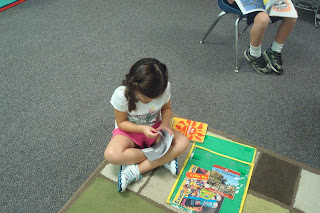
Emilia Ferreiro and Ann Teberosky, researchers whose work is based on Piagetian theory, conducted a qualitative study on how children come to know written language. They explored the developmental processes of learning to read and write and published their findings in the book Literacy Before Schooling. The researchers focused on print awareness, environmental print, and writing development.
In their early years, children find a variety of ways to express their literacy knowledge. Children draw, write and pretend play to communicate meaning. Children role-play literacy events that they observe in their daily lives. For example, children often play restaurant using a notepad and pen to take orders. Through these efforts to communicate, children are demonstrating their knowledge about reading and writing. Does print in children's environment help them construct knowledge about reading and writing? Ferreiro and Teberosky explored preschoolers' literacy knowledge before receiving formal reading instruction. They found that children had constructed knowledge about print before they came to school and that they continually test that knowledge through interaction with print. The researchers found that the children in the study had precise ideas about the number of characters needed for something to be readable. They also had the idea that repeated letters were not something to read. The researchers found that young children imitated reading behaviors such as holding the book in a certain way, using page turning gestures, and eye movements and body language of reading.
In Ferreiro and Teberosky's study, they found that children reinvent writing for themselves. Children actively model what they see in the adult world. As they experiment with writing, children construct and refine their knowledge of written language. Children's names are a springboard in writing development. Children see their names written frequently and begin to use the letters in their names in their writing. This can be used as the basis for further learning in writing.
The work of Ferreiro and Teberosky is important in the field of education and the implications from their research should empower teachers and parents to help their children in their literacy development. In the next blog post we will look at the implications of this study and offer suggestions for what parents and teachers can do to further children's literacy development.

Emilia Ferreiro and Ann Teberosky, researchers whose work is based on Piagetian theory, conducted a qualitative study on how children come to know written language. They explored the developmental processes of learning to read and write and published their findings in the book Literacy Before Schooling. The researchers focused on print awareness, environmental print, and writing development.
In their early years, children find a variety of ways to express their literacy knowledge. Children draw, write and pretend play to communicate meaning. Children role-play literacy events that they observe in their daily lives. For example, children often play restaurant using a notepad and pen to take orders. Through these efforts to communicate, children are demonstrating their knowledge about reading and writing. Does print in children's environment help them construct knowledge about reading and writing? Ferreiro and Teberosky explored preschoolers' literacy knowledge before receiving formal reading instruction. They found that children had constructed knowledge about print before they came to school and that they continually test that knowledge through interaction with print. The researchers found that the children in the study had precise ideas about the number of characters needed for something to be readable. They also had the idea that repeated letters were not something to read. The researchers found that young children imitated reading behaviors such as holding the book in a certain way, using page turning gestures, and eye movements and body language of reading.
In Ferreiro and Teberosky's study, they found that children reinvent writing for themselves. Children actively model what they see in the adult world. As they experiment with writing, children construct and refine their knowledge of written language. Children's names are a springboard in writing development. Children see their names written frequently and begin to use the letters in their names in their writing. This can be used as the basis for further learning in writing.
The work of Ferreiro and Teberosky is important in the field of education and the implications from their research should empower teachers and parents to help their children in their literacy development. In the next blog post we will look at the implications of this study and offer suggestions for what parents and teachers can do to further children's literacy development.
Friday, June 24, 2011
What Are You Reading This Summer?
It's amazing to me that people think teachers have a 3 month vacation. Little do they know that we are only technically paid for 9 months. (Our checks are evenly dispersed across the 12 months though.) We get out of school at the end of May and begin in early August so that leaves June and July for "unpaid vacation." I don't know about you, but I've engaged in some heavy duty professional development already during the month of June. I also have several books to read this summer. Here is my list. I hope I get them all read!
Catching Readers Before They Fall: Supporting Readers Who Struggle, K-4
by Pat Johnson and Katie Keier
There is a quote on the back cover by Linda Dorn. "Bringing a Vygotskian perspective to teaching and learning, Pat and Katie have done a wonderful job of meshing theory and practice to produce a book that is both important and practical. I warmly recommend it to all teachers of reading." Makes you want to read it doesn't it.
Can We Skip Lunch and Keep Writing? by Julie Ramsey
I can't wait to read this one by my NBCT friend. I admire all she does with students and especially in the areas of technology. In this book she describes how she uses technology with her students to collaborate both in class and online.
Interventions That Work: A Comprehensive Intervention Model for Preventing Reading Failure in Grades K-3
by Linda Dorn and Carla Soffos
This book was recommended to me by a fellow Kindergarten teacher who had great success in getting her class of diverse students on grade level.
Teaching 2030: What We Must Do for Our Students and Our Public Schools...Now and in the Future by Barnett Berry
This book is part of a book study lead by our technology coach. I can't wait to hear everyone's view of this topic.
Now...I want to know what you are reading this summer.
Catching Readers Before They Fall: Supporting Readers Who Struggle, K-4
by Pat Johnson and Katie Keier
There is a quote on the back cover by Linda Dorn. "Bringing a Vygotskian perspective to teaching and learning, Pat and Katie have done a wonderful job of meshing theory and practice to produce a book that is both important and practical. I warmly recommend it to all teachers of reading." Makes you want to read it doesn't it.
Can We Skip Lunch and Keep Writing? by Julie Ramsey
I can't wait to read this one by my NBCT friend. I admire all she does with students and especially in the areas of technology. In this book she describes how she uses technology with her students to collaborate both in class and online.
Interventions That Work: A Comprehensive Intervention Model for Preventing Reading Failure in Grades K-3
by Linda Dorn and Carla Soffos
This book was recommended to me by a fellow Kindergarten teacher who had great success in getting her class of diverse students on grade level.
Teaching 2030: What We Must Do for Our Students and Our Public Schools...Now and in the Future by Barnett Berry
This book is part of a book study lead by our technology coach. I can't wait to hear everyone's view of this topic.
Now...I want to know what you are reading this summer.
Subscribe to:
Posts (Atom)